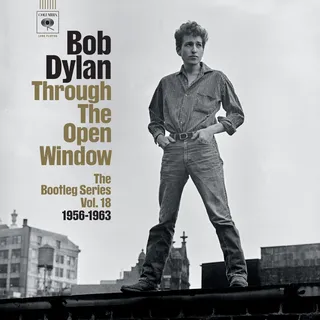
The article traces the story behind Through the Open Window, the 18th volume in Bob Dylan’s Bootleg Series, and uses it to illuminate Dylan’s remarkable transformation from a rock’n’roll-obsessed Minnesota teenager into America’s preeminent young folk artist. In 1956, 15-year-old Robert Zimmerman was leading an amateur rock band in St. Paul, unaware of folk music or his future heroes like Woody Guthrie. Just seven years later, as Bob Dylan, he was performing triumphant, myth-shaping concerts at Carnegie Hall and becoming a cultural icon whose songs were already considered modern standards.
The new box set spans eight CDs, 165 tracks, and nearly nine hours, covering Dylan’s development from 1956 to 1963—longer and more comprehensive than most of the Bootleg Series releases. Rather than focusing on a single pivotal moment, it presents his evolution as a narrative journey: from small-town garages to coffeehouses in Greenwich Village; from tiny studios and sparsely attended shows to the grand stage of Carnegie Hall. Taken as a whole, the set resembles an audiobook-like epic documenting a young artist discovering new personas, writing groundbreaking material, and learning how to command audiences.
The earliest track—an ultra-lo-fi, 37-second teen rock cover of “Let the Good Times Roll”—serves as a symbolic opening chapter showing Zimmerman as merely one of millions of kids smitten with rock’n’roll. As the set progresses, listeners witness his discovery of folk, the shift from electric to acoustic guitar, and the deepening weight in his performances as he grapples with Guthrie’s influence. Gradually, he moves from one among thousands of aspiring folkies to a singular creative force.
The article frames Through the Open Window not just as an archival release but as a genuine narrative experience—one that finally connects Dylan’s mythical early personas with the real teenager he once was. The writer effectively captures the romance and mystery of Dylan’s self-invention: the way he tried to erase parts of his biography with whimsical lies, asserting control over his own story even as it was being written. This helps explain why the set feels revelatory; it restores continuity between the rock’n’roll kid and the folk prophet.
The review celebrates the box set’s sprawl rather than apologizing for it. By comparing the experience to reading a Great American Novel, the article positions the set as something meant to be lived with for days or weeks—not skimmed through like the shorter highlights editions. The vivid imagery of beat-up New York apartments, smoky clubs, and sharply dressed studio engineers grounds the music in a tactile world. The listener is invited not just to hear Dylan’s growth but to inhabit the spaces where that growth happened.
Most powerfully, the article argues that the set’s value lies in revealing process—the transformation of an ordinary Midwestern teen into an artist who reshaped American music. It is as much a portrait of artistic becoming as it is a historical compilation. The opening 37-second home recording becomes a brilliant device: a tiny, awkward fragment that makes everything that follows feel earned.
Overall, the review is enthusiastic, immersive, and thoughtful. It positions Through the Open Window as an essential release for anyone interested in Dylan’s origins, American folk history, or the broader story of how artists construct themselves.